Transitioning to Minimalist Running

This is the story of how Kabri became a runner, and the tricks and
tools she used along the way. Read more about her running story
in Part 1 and Part 2.

Part 3: Transitioning to Minimalist Running

Using Medi-Dyne during the transition to minimalist running.

Three years ago, I began training for my very first half marathon. Little did I know that my journey of becoming a “runner” was just beginning.

If you’re just tuning in, I am an advocate of stretching and massage for runners. How do I know all of the benefits of stretching and massage now? And why didn’t I incorporate these great Medi-Dyne products into my recovery and maintenance three years ago?

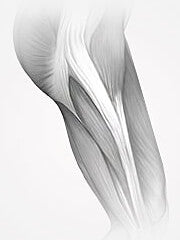
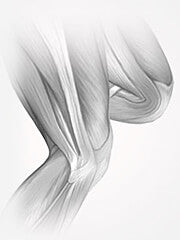
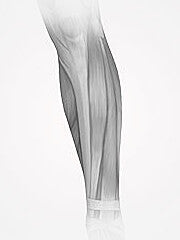
Well besides the fact that hindsight is always 20-20, I was recently able to put my newly-acquired ProStretch Plus and RangeRoller tools to the test while I was transitioning back to minimalist running. You see, the popular “barefoot” trend requires a runner to build up their foot, ankle and knee muscles. You must build up your muscles and expose them to the shock and stresses that a cushioned sneaker may have absorbed in the past. This transition takes time and patience to avoid injury, and is similar in many ways to the muscle development that takes place while trail running.

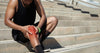
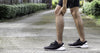
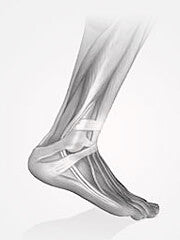
After moving to San Francisco over a year ago, I transitioned from running on mostly trails to road running. The city’s hills kept my leg muscles strengthened, but I was quickly losing the strong muscular protection I had built up around my knee and ankle joints.  In order to maintain the muscular support my joints had worked so hard to establish, I decided that I would slowly transition into a pair of popular “barefoot” style shoes. On my first runs I found that first, I absolutely loved being able to feel the road under the soles of my feet—my toes having to grab for the road. Secondly, by landing on the forefront of my feet, my calves were tightening up as quickly and as painfully as when I initially started trail running.

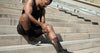
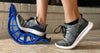
To promote healthy muscle growth and alleviate the soreness, I would do a concentrated stretching routine with my ProStretch Plus after each run, focusing on not only my calves, but also my Achilles tendons. I found that this newly experienced “tightness” would travel down my Achilles and into the bottom of my feet. By simply adjusting the angle and wedge on my ProStretch Plus, I was able to increase the flexibility of not only my calves and hamstrings, but also my arches and toes.

In short, I believe that injury prevention and muscle growth can be facilitated by the proper stretching of overly-tight muscles and by “combing” out the knots that develop in damaged muscle fibers, promoting renewed blood flow and muscle repair. I have found the ProStretch Plus and RangeRoller to be my two key tools for ongoing maintenance in my trail and minimalist road running interests. This year I look forward to setting a new road marathon PR at the Oakland and San Francisco Marathons! Finish strong!

For more information on the ProStretch Plus or RangeRoller visit
www.medi-dyne.com. To read more about Kabri's running experience;
how she started running and how she transitioned to minimalist
running with the help of Medi-Dyne  products, read Part 1 or Part 2.


Posted in Calf Pain, Heel Pain, IT Band, Physical Therapy, Running, Shin Splints | Tagged , , , , , , , , , , , , , , | Leave a comment

Race Day Reflections

Craig’s Corner: Reflections from my first marathon.

Craig DiGiovanni. VP of Sales & Marketing, Medi-Dyne Healthcare Products. Avid Runner. Wannabe Marathoner.

Well, we did it. My wife, Courtney, and I successfully completed the Oklahoma City Memorial Marathon this past April. We finished our first marathon.

First, I want to congratulate Oklahoma City on a wonderful marathon.   The race had excellent organization and communication, and the overall city-wide support was inspiring.   Not only was this our family’s first Marathon, but I also think it was so special because we were running to honor those 168 people who lost their lives in the OKC bombing. I’d like to give a special “Thank You” to all of those people who have selflessly rallied to help victims and their families.   The people of OKC have turned tragic hatred into a positive celebration of good and community.  They should be proud of that.

The 26.2 miles course was a nice course.   There was plenty of diversity and support along the way.  (Although, I do wish there were a few less hills…I thought OKC was flat!)   As I reflect on the marathon, I realize there are great parallels between life and running a marathon.

Here are my top 10 reflections;

  • Enjoy the journey. The journey of preparing for the race was just as rewarding, if not more, than the race itself.   Of course that is the story of life too isn’t it?   Don’t make the mistake of not enjoying and appreciating the journey.   It is the journey that prepares you and helps you to appreciate the ultimate destination, whether in life or in marathons.
  • Set goals, and see them through. To get the most out of life, it is best to have a goal and a plan to achieve it.  The same goes with running a marathon: have a plan, stick to it both in training and during the race.
  • The more the merrier! The more people you train and do the event with the more enjoyable the experience. Life is meant to be shared, that includes running marathons!  I am so grateful to my wife for training with me and running each step of the marathon with me.  The benefits of that are for another blog.
  • Be flexible, yet determined. You never know what life might throw at you, just like you never know what the marathon day might be like. Be prepared to run in any weather, and know ahead of time that you are running no matter what!
  • Stay hydrated. Water is a key element to our bodies.   During long runs and the race itself it is important to drink fluids…but as in life, be careful not to drink too much!
  • Early bird gets the worm. I think I said this one before but I will say it again, get to the race early.  Get warmed up and prepared, into the right “corral” and give yourself the time to enjoy the atmosphere!
  • Pace yourself. Life is not a sprint and neither is a marathon…at least not for common folk like me.  26.2 miles is truly a long distance to run.   Rely on your training and pace yourself!
  • Just do it, participate. There is so much to life and so many ways to enjoy it.  There are also many ways to enjoy running events besides running the whole 26.2.  There is the half marathon, the marathon relay, the 5K fun run and walk, and also volunteering to help support, cheer, or organize the race.  There is something for everyone at every level.
  • Stay Positive. Positive encouragement cannot be valued enough in life and in running. I really enjoyed reading the fun and encouraging signs of supporters along the race. One read, “Run total stranger, run!” Positivity is contagious. Don’t feel too shy to high five the cheering child, or wave at the supporting spectator along the way. Positivity can go both ways.
  • Overcome to succeed.  Running, like life, has its set-backs.  But just like life, there is always a new day just around the corner. Focusing on many of the following reflections (positivity, goals, flexibility, partners, the journey, etc.) are simple ways to overcome training or race-day set-backs.

There are certainly many more memories and reflections but those are my top 10.   There were some really funny and inspiring moments that I might have to write about later, but for now I hope you can use some of my reflections to get the most out of your next race.

Posted in Running | Tagged , , , , , , , | 1 Comment

The Pains of Trail Running

This is the story of how Kabri became a runner, and the tricks and
tools she used along the way. Read more about her running story
in Part 1.

Part 2: The Pains of Trail Running

Kabri uses ProStretch Plus and RangeRoller for trail running pain prevention.

Three years ago I began training for my very first half marathon. Little did I know, my journey of becoming a “runner” was just beginning.

If you’re just tuning in I’m Kabri, newly self-professed trail runner! For the next year I challenged myself, running and hiking distances from 10k to 50k on the trails in the Bay Area. It took quite a while for my body to adapt to the trails and I believe that many of my challenges would have been resolved or largely alleviated if I had had a ProStretch Plus back then. My lower calves would become so tight during and after my runs that they would cramp. My feet would feel “asleep” with the loss of blood flow through my calves. It was very painful. The ProStretchPlus is ideal for maintaining and restoring flexibility to these tight muscles, and is especially good at focusing the stretch along your inner or outer calf muscles, as needed.

Whether you are a strong road runner, or are completely new to running, running on trails places stresses on the ankle, leg and knee muscles that are not often used. These stabilizer muscles allow your feet to spring over rocks and avoid unearthed roots while streaming down a single-track trail system under your favorite tree canopy. After your first trail run you’re likely to be very tight in your calf muscles and hamstrings as these muscles will have been highly engaged as you picked the most stable path along river beds and steep inclines.

Along with the increased flexibility that I would have achieved by properly stretching my calves and hamstrings, I realize how helpful the RangeRoller would have been to post-run recovery. The RangeRoller provides a deep tissue massage that allows my muscles to repair themselves by breaking up the knotted muscle fibers and allowing fresh blood back into the damaged space.

Climbing and descending hills and mountains goes hand-in-hand with trail running; both the uphill and downhill portions of a run, especially, take a toll on your quads. After my long training runs, I would make an appointment with a masseuse, knowing that large knots would form in my quad muscles that could not be released with stretching alone.  The RangeRoller essentially provides the same service, but is much more convenient. I’ll warn you now – whether by masseuse or RangeRoller – tackling knotted muscles by compressing and stretching the damaged fibers is a painful but rewarding process!


For more information on the ProStretch Plus or RangeRoller visit
www.medi-dyne.com. To read more about Kabri's running experience;
how she started running or how she transitioned to minimalist
running with the help of Medi-Dyne  products, read Part 1 or Part 3.
Posted in Athletic Training, Calf Pain, Heel Pain, Physical Therapy, Plantar Fasciitis, Running | Tagged , , , , , , , , , , , , , | Leave a comment

Running4theMasses Uses Runner’s Relief

Runner and running blogger, Chad, reached out to Medi-Dyne looking
for some tools to help him and fellow runners. Here is what he
had to say about the ProStretch Plus, RangeRoller, and StretchRite.

Running4theMasses Product Review

By running4themasses on

About a month or so ago, I was reading a running publication, and I stumbled upon a company specializing in a vast spectrum of solutions for pain and injuries, not only for running but also for all aspects of life.  The company was Medi-Dyne Healthcare Products.

After looking at their website and the vast array of products they offered, I wanted to get some more information from them as to the benefits of their products for runners, and how their products might improve my performance and daily quality of life.

I was so happy I contacted Medi-Dyne.

For more information on these products, I highly recommend you check out the Medi-Dyne website for incredible information on all of the products they provide, as well as a Pain Solution Center where you can select the body part/injury that gives you trouble, and Medi-Dyne will give a breakdown of that selection as to causes of the injury, ways to alleviate the injury, and their product solutions to help with recovering from these injuries. It is very insightful and well worth looking at.

After some correspondence back and forth,talking about products and discussing what I thought might be helpful to runners, it was determined that I should look into the Runner’s Relief package and the StretchRite.  That is exactly what I did.

The Runner’s Relief Package:

The Runner’s Relief package is heaven-sent, and comes complete with the ProStretch Plus and RangeRoller.

What an immediate impression it made on me, and most importantly, on my body.  The ProStretch Plus has multiple exercises you can do to help with shin splints, tight calves and hamstrings, Achilles tendonitis, and Plantar Fasciitis.  In the package for the ProStetch Plus, it comes with a nice color pamphlet with complete instructions for the various exercises you can do for the various ailments you might have.

Personally, since I had started a new exercise program, I had started to feel pain shooting through the soles of my feet, and at times, it made it impossible for me to continue working out.  After a few minutes of doing specific exercises on the ProStretch Plus, the pain would subside, and I could continue my workouts.  Without the ProStretch Plus, my workout would be over.  The ProStretch Plus also has worked incredible for me to stretch my calves, hamstrings, and even hip flexors prior to any activities I have done recently, and also stretching after those activities.  The back and forth, or “Teeter-Totter” movement of the ProStretch Plus, make it so easy to use and extremely effective on my muscles, and in the short amount of time you need to use it, it does exactly what it is designed to do.

As for the RangeRoller, I’ve used other self-rolling products before, but I have to say that none have been as effective as the Medi-Dyne RangeRoller.  The design of the RangeRoller is great.  As seen above, you’ll notice the multi-layers of the RangeRoller.  It is so effective with its trigger point threads to get very deep into the muscle and relieve any tightness or soreness you may feel.  I know it has done that for me.  The great thing about the RangeRoller is that you use it on your muscles prior to a workout, and you will feel great throughout your workout.  Medi-Dyne recommends about 20+ rolls of the RangeRoller over the muscles to help warm and stretch them, and it really does that.

Here are 2 great endorsement for the RangeRoller:

First, my wife just finished her 2nd half-marathon, and when she got home, the 1st thing she grabbed was the RangeRoller and she went to work on her legs (calves, quads, hamstrings, shins, even her feet), and she said she felt a great deal of release of tightness she was feeling from running the race.  She did that throughout the remainder of the day, and the next morning, she woke up with very minimal pain/discomfort and almost refreshed.

2nd, my mom has been winning the battle with cancer, but one of the side-affects of her treatments was that she became diabetic, and has been having battles with Neuropathy.  The Neuropathy effects her hands and feet making her loose feeling, etc.  I introduced her to the RangeRoller recently, and she uses it daily on her hands, feet, legs, and she has said that it has helped tremendously with getting blood flowing to her hands/feet, and the Neuropathy has not subsided, but the effects have diminished and she doesn’t get as much of the on-set now having used the RangeRoller.

I highly recommend the  Medi-Dyne products, and know that in the upcoming weeks, I will be purchasing some new shoe inserts to help give me some spring in my step and some new-found energy.  I can’t wait to try either the Gaitors Full Length or the Road Runners.

Thanks for your time!!!

- Chad

Thanks Chad for sharing this with us!  Read more about Chad's
Medi-Dyne experience on his blog: Running4thMasses.
Posted in Athletic Training, Calf Pain, Heel Pain, IT Band, Physical Therapy, Plantar Fasciitis, Podiatry, Running, Shin Splints | Leave a comment

The Importance of Running Form

Craig’s Corner: Form over function or function over form?

Craig DiGiovanni. VP of Sales & Marketing, Medi-Dyne Healthcare Products. Avid Runner. Wannabe Marathoner.

Like any moving object, variables change at different speeds. For example, when trying to turn a car, you can turn in a smaller radius at lower speeds than you can at higher speeds. Or, the faster you are going, the longer and farther it takes to stop.  So it is with running; variables change with the increase and decrease of speed.   I have learned this first hand during my training for the OKC Memorial Marathon.

During the week, I have been running my shorter distances at a much faster tempo than during my long runs on the weekend. What I have noticed is that I am experiencing tightness in different parts of my body, based on the speed at which I run.

At the faster speeds my attention is more on my breathing and overall feeling of being tired, and maybe a little on the tightness in my calves. I deal with each of these issues easily, by first stopping my run temporarily so I can catch my breath….I know rocket science, right?  And second, for my tight calves; I use my Tuli’s heel cups to prevent most of the shock that causes the Achilles and then calf tightness, and also I do some simple ProStretch Plus stretching post run and throughout the day. These latter techniques are such simple measures, but within a day or two the tightness goes away.

Running form and the interconnective chain of the legs.

When I run at slower speeds during the longer mileage in my training, my attention seems to switch to the arches of my feet and to my quadriceps. At first this confused me because I wasn’t feeling excessively tired during my long runs, more “heavy” than tired. The more I thought about it though, the more I realized that at slower speeds I was changing the way that I ran.   My running form at slower speeds was putting more pressure on my arches and was also forcing my quadriceps to engage more.   Essentially, my running form was changing the way the tendons and muscles, that make up the interconnective chain of my legs, were working together.  My form was driving function.

The solution to my dilemma was to use more arch support on my slower runs and also roll out and stretch my quads really well after my run.   Once I supported my arches and also built up my quads my “attention” areas all but went away.

So, the next time you start having to pay some attention to a problem area consider all the variables, not only around that area, but also those that are interconnected.   Like me, you might find the pain in one place is caused by a situation in another place.

For more information on techniques and tools that help with those
problem areas visit www.medi-dyne.com. Read more from Craig's Corner,
and let us know what you think by leaving a comment below.
Posted in Athletic Training, Calf Pain, Heel Pain, Physical Therapy, Plantar Fasciitis, Running, Shin Splints | Tagged , , , , , , , , , , | Leave a comment

A Beginning Runner’s Story

This is the story of how Kabri became a runner, and the tricks and
tools she used along the way. Read more about her running story
in Part 2 and Part 3.

Part 1: A Beginning Runner’s Story

How Kabri choose running…or how running choose her!

Three years ago, I began training for my very first half marathon. Little did I know that my journey of becoming a “runner” was just beginning.

As an active child and young adult, I participated in many forms of team sports. The love I had for sporting success, namely in competitive soccer, softball and rugby, could not scrub out my disdain for running when not chasing a ball. After college and a couple of years in a very active job, I earned both a promotion and a transfer. I was brought in from the field and placed in front of a desk, as well as moved from the east coast to San Francisco. With the beautiful Bay Area’s outdoor opportunities around me, I was determined to be the exception to my coworkers and I called “the office 35”– the 35 pounds everyone seems to gain after coming in from field positions.

When I started to tally my options, I found that there was only one activity that was realistically within my budget and time constraints. My tally went something like this:

  1. Cycling: need a bike – parts, maintenance and gear are expensive
  2. Swimming: need a pool – work hours limit activity to before-6am or after-6pm
  3. Local team sport: work hours limit availability and prohibit consistent attendance.
  4. Running? Gear—not too expensive, time—flexible, area— boundless

Only problem— I hate running.  I was determined to make running work. I figured that if I could somehow learn to love running now, then I would be in a great position for the rest of my life: able to get up and run wherever I was in the country or world. So, in order to facilitate a semi-enjoyable entry into the world of running, I decided to combine my goal with another love I had found since moving to California – hiking. I was going to be a trail runner, it was settled!

To read more about Kabri’s running experience; how she overcame new running aches and pains,  read Part 2 in the series.

Posted in Athletic Training, Physical Therapy, Running, Shin Splints | Tagged , , , , , , , , | 2 Comments

ProStretch Plus: A True Innovation in Pain Prevention

Necessity Is the Mother of Invention

The ProStretch was originally developed by an auto mechanic who was rehabbing a knee injury.  Over time he realized that the brake shoe from a car was the best thing he could find for stretching out his calf muscles, while building flexibility and range of motion back in to his calf muscles and lower leg.   He became passionate about how well it worked, passionate enough to want to share his discovery. From necessity and passion was born The Original ProStretch.

ProStretch Joins the Medi-Dyne Family of Products

In 1998 Medi-Dyne acquired the Tuli’s product line.  In discussions with the original Tuli’s® Classic Heel Cup inventor, San Diego podiatrist Dr. Murray Davidson, we quickly learned how important stretching was to the health of the calf muscles and the prevention of the many injuries associated with the lower leg, including Plantar Fasciitis, Achillies tendonitis, calf strains, and  shin splints.  So we began to look for the most effective solution to provide the long-term relief and stretching that would complement the immediate relief provided by the Tuli’s Heel Cups and other Tuli’s products.  When we found The Original ProStretch in 2003 we knew we had found the best lower leg stretching device available then and for the next 20 years!

Building on Success

As is the case with all Medi-Dyne products, we constantly solicit feedback from medical professionals, professional and amateur athletes, and all users on ways we can improve the product, usage experience, and end results.  While the ProStretch (also known as the StepStretch in some retail outlets) was a great product, it had some shortcomings.

  1. One Size Doesn’t Fit All
    The Original ProStretch is great, but it is a “one-size-fits-all” product.  Unfortunately, people are not one size fits all.
  2. People’s Feet Are Getting Larger
    It’s true. Once, a man’s size 14 would have been considered the footprint of a giant. But what was seen as enormous is apparently becoming quite normal. The average man’s shoe has gone up a full size in the past five years. The Original ProStretch just wasn’t built to accommodate the growing majority.
  3. Room For Improvement
    Many people suffer from Achilles tendonitis, plantar fasciitis, tight calves or shin splints. These pain sufferers were in need of a solution that would maximize the stretch felt along the interconnective chain of the lower leg. We realized that we could improve the stretch by elevating the toes during stretch.

We went about re-engineering the ProStretch to be bigger, stronger, lighter, and customizable, while offering a deeper stretch.   When it was all said and done, the ProStretch Plus was born.   For a complete review of all of our ProStretch products visit: www.medi-dyne.com.

Trying is Believing

We have had more people fall in love with the ProStretch and ProStretch Plus than any other product, simply by standing on it.  Just check out these “before and after” user video reviews.

What makes the ProStretch Plus work so well?  A few things. It is biomechanically shaped to put your foot in the optimal stretching position to get the best results.   Combining that with the rocker bottom, you get the best calf stretch, along with progressive and constant pressure that gives you an unsurpassed lower leg stretch.

Nothing works better, not a curb, not a wall, not a slant board, nothing. The ProStretch has been medical proven to stretch the calf better than conventional methods – Please see the following study posted on our website, Comparison of Two Methods of Stretching the Gastrocnemius and Their Effects on Ankle Range of Motion Karen Maloney Backstrorn, C Forsyth. B. Walden”.   You can also read unsolicited testimonials at www.medi-dyne.com.

For more information on the ProStretch Plus or ProStretch visit www.medi-dyne.com/estore/.

Posted in Athletic Training, Calf Pain, Cycling, Golfing, Heel Pain, Physical Therapy, Plantar Fasciitis, Podiatry, Running, Shin Splints | Tagged , , , , , , , , , , , , , , , , , , , , , , , | Leave a comment

Running in the Wild

Craig’s Corner: “Hooters”

Craig DiGiovanni. VP of Sales & Marketing, Medi-Dyne Healthcare Products. Avid Runner. Wannabe Marathoner.

If you are thinking this is about a restaurant chain or anything related, you are seriously wrong.  I am referring to the original “hooters”—our feathery owl friends!   Yes, this is the next installment of my “wildlife” experience, sightings of critters while training for the OKC Memorial Marathon.

Last week my running buddy, Sunnie (my dog) and I stepped out into the garage, ready to head out for our morning run. Once in the garage, we were met by a very loud “Who, Who, Who, WhOOOOO”.   I looked down at Sunnie, and I think our eyes were probably as big as the owl’s! It sounded like the “hooter” was in the building.

A man's best running buddy. My dog, Sunnie, runs with me every morning.

Realizing it was an owl, I opened the garage door fully expecting that the act would scare it away because it had to be really close.   To my surprise, no sooner had the door finished opening than we were covered with an even louder, “Who, Who, Who, WhOOOOO”.   This time the first “hooter” was followed by a second and then a third, “Who, Who, Who, WhOOOOO”.   It was a full blown “hooter” convention around my driveway!
I promptly got out my flash light and shined the light at the first and closest “hooter”.   The owl was sitting on top of my neighbor’s house not 20 yards from me.   It turned its head (eerily like owls do) and looked at me and Sunnie.    We didn’t seem to bother it much because it turned back and “Who, Who, Who, WhOOOOO’d” again. We watched the owl and listened to the others respond a few more times and then decided it was time to go run.

Ok ok, this may not be my neighborhood...but you get the picture!

The morning encounter with these “hooters” definitely had me on edge. I was a bit nervous because years ago, my wife was walking on our running trails and was attacked by an owl.   Not a good experience.   Think vice on the head.   Anyway, I turned on my head lamp, kept an eye on “hooter” number one and quickly “exited stage left”.   Thankfully, we didn’t have any other company throughout the rest of our morning. When we got home the “hooters” had left the building, the party was over.

That’s it for now until our next “wildlife” running experience. Seriously, if you don’t get to see enough wildlife, get out and run! What have you encountered while running in the “wild”?

Posted in Running | Tagged , , , , , , | Leave a comment

Suffering from Heel Pain?

Are you suffering from heel pain? Chances are, you are in good company. Heel pain is one of the most common complaints relating to the foot.

Here are a few things you may not have known about heel pain;

  • Millions of people receive treatment for heel pain each year.
  • Many people live with it for a year or more before seeking help or finding a solution.
  • While many people think they have heel spurs the more accurate diagnosis is often Plantar fasciitis.
  • It is estimated that 1 out of every 10 people will suffer from Plantar fasciitis.
  • 90% of the Plantar fasciitis cases occur after the age of 40.
  • Factors that may increase your risk of developing heel pain include; weight, pregnancy, exercise, non-supportive shoes, tight muscles, age and occupation.
  • According to the Mayo Clinic, about 90% of the people who have Plantar fasciitis recover with conservative treatments in just a few months.
  • Supporting your heels with shoe inserts or heel cups can provide immediate relief from heel pain.
  • Making stretching and strengthening part of your daily routine is the best way to prevent the occurrence or reoccurrence of heel pain.
  • Maintaining flexibility throughout the lower leg is the best way to heal Plantar fasciitis.

For more information on Heel Pain Solutions or Plantar Fasciitis Treatments visit the pain solution center at medi-dyne.com.

Continue reading

Posted in Heel Pain, Plantar Fasciitis, Podiatry | Tagged , , , , , , , , , , , , | 1 Comment

Make the Most of Your 13.1

Craig DiGiovanni. VP of Sales & Marketing, Medi-Dyne Healthcare Products. Avid Runner. Wannabe Marathoner.

I thought I knew what to expect on my first half marathon (13.1 miles), but quickly realized that I was wrong.   In training for the Oklahoma City Memorial Marathon, I had finally reached the half way mark: 13 miles. I decided to celebrate this milestone by running an official half marathon, and signed up for the Fort Worth Cowtown. The good news is the race turned out to be a far better experience than I expected, but I definitely learned some things that I feel are worth sharing.

Here are some before, during and after tips for making the most of your 13.1 half marathon.

Before the race

  1. Get there early: I got to the race early and was glad.  I didn’t stress about parking, had plenty of time to use the restroom and enjoy the atmosphere.
  2. Go to the bathroom: Using the restroom before the race is a must.
  3. Do what is routine: As per my usual morning runs, I drank a little but didn’t eat before the race. I was glad I didn’t, butterflies were enough for my stomach.
  4. Plan ahead or bring a buddy: Depending on weather, having someone to hand your clothes off to before the race starts is a nice bonus.  Otherwise, you are either cold while you’re waiting in the corals (because you don’t have them) or you are warm but then have to leave them at the start, and go on a crusade to find them after the race.

During the race

  1. Let ‘er rip: My adrenaline must have been way up, because my split times were about the same as my 5K and I held steady the whole race.   I was cautious the whole race about that, but next time I won’t be, and I will be more willing to push my times.
    Practice makes perfect: Running and drinking are an art.   I would try that before the race.   How you get the water in your mouth without showering you and everyone around you, and then how you get it down without coughing…well, it took a little practice.   I am sure I provided a laugh or two for those on the sidelines!
  2. Find flat surfaces: Looking for flat parts of the road are a must if you are prone to shin splints.   It took me about 1 mile to realize that an extra step or two to the left or right to get off an angle in the road was worth it.   The crown of the road or closest to the edges seemed to work the best.   13.1 miles at an angle could be problematic.
  3. Send some thanks: There are so many incredible people volunteering and encouraging runners during races, I wish I would have thanked more of them along the way.  If you have the breath, thank them.
  4. Snack smart: Energy gels really seem to work.  I like Gu and Cliff products because they taste good and go down easy.   Also, find a product that doesn’t produce large fluctuations in your energy; big highs then deep lows.

After the race

  1. Enjoy the moment: Give yourself time to take it all in, don’t rush out to leave so you can enjoy the moment.   I had to high tail it out of there for life’s next event, but wish I could have just hung out a few more minutes to enjoy the post race food and activities, and to let the accomplishment sink in.
  2. Run for fun:  I ran the race just to finish and I am glad that I did. I think it is great to measure your time, but if you aren’t enjoying the people, the scenery and the accomplishment, then it won’t last very long and won’t be much fun.
  3. Bring along recovery tools: If you have a roller, make sure you have it because you will surely need it.  Once you are stagnant your muscles will begin to tighten up. Having tools at the race (in your car, etc) to help stretch and loosen your muscles will help decrease future soreness. I of course am a RangeRoller guy, a must for any post race recovery.

That was my race experience.   Hope these tips help to prepare you for your next race. Let us know if there are any race tips that you swear by, leave us a comment. I hope you enjoy your 13.1!

Posted in Running, Shin Splints | Tagged , , , , , , , , , , , , , | Leave a comment