Pain Solution Center

testimonials

The Body's Interconnective Chain

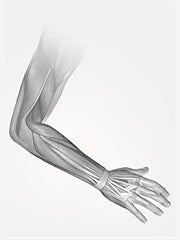
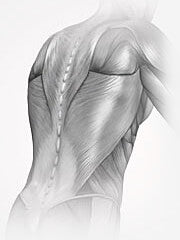
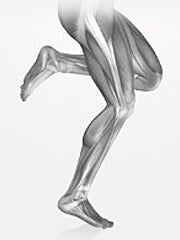
The body is an amazing network of highly interconnected parts. This is especially evident when it comes to performance and pain. When everything is in balance your interconnective chain of muscles, ligaments, and tendons all work together to allow for painless, almost effortless movement. Until a link of that chain is weakened or injured.

It's somewhat expected that a stressed or injured muscle causes some level of discomfort in the surrounding muscles. But, because of the nature of the interconnective chain, the impacting "domino effect" of that weak link may be greater than you realize.

It's All Connected

The muscles, tendons, ligaments, and joints in your body act as links in an interconnective chain, working together to allow you to accomplish basic motions like sitting, walking, and running. If any one of these links is injured or not functioning properly the entire chain suffers.

Have you ever sprained an ankle only to find a week later that you're suffering from lower back pain? Then you've experienced first-hand how weak links put undue stress on stronger ones. Weak muscles cause tighter (stronger) muscles to be recruited by the central nervous system in order to perform the same movement. These other muscles are required to pick up the slack so you may not realize pain right away, but these other muscles are not made to do double duty for very long and "chain reaction injuries" and muscle imbalances can occur.

These injuries and imbalances occur when muscle strength and functioning along the interconnective chain is not equally efficient. A muscle may be shortened and tight, or weak and therefore is unable to "relax" or contract when needed. Or a muscle or group of muscles may become chronically "over stretched" and weak and are unable to contract when needed. This imbalance modifies body movement, putting strain on muscles, tendons, ligaments and joints. The end result is often lower back pain.


While this may be the body's natural form of protection, the result is often an unbalance that, over time can cause pain in the joints, muscle strains, or injuries that sometimes require surgery. Most people don't realize they have these imbalances until it's too late.

It pays in dividends to prevent injuries whenever possible and to look for opportunities to strengthen your weak links.

Where's Your Weak Link?

Foot and Heel Pain

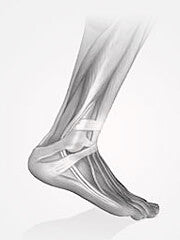
  • Often the first breakdown an individual realizes in their lower leg "chain" is heel pain.
  • It may feel as though it has happened suddenly but in fact it usually develops gradually, taking its toll on the interconnective chain long before it is noticed.

Shin Splints

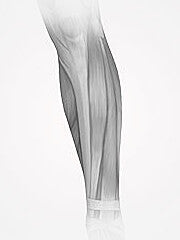
  • A common breakdown often occurring in athletes and sports enthusiasts the pain of shin splints often causes the sufferer to change the way they walk or run which is one of the quickest ways to cause an imbalance throughout the interconnective chain.

Ankle Pain

  • Ankle sprains happen when the foot twists, rolls or turns beyond the norm. This causes the ligaments to stretch beyond their normal range in an abnormal position and if the force is too great, you may even tear the ligaments. While a sprained ankle may seem like a minor injury, there are often residual effects, such as localized weakness, and loss of balance that increase the risk of future injury.

Back Pain & Flexibility

  • An exercise program that strengthens weak muscles and stretches the tight muscles in your body's core which assists in retraining the neuromuscular system to perform more efficiently and to prevent these common injuries.